First Aid Courses Liverpool, Manchester and across the North West – Fire Warden Training | Health and Safety training provider

Bookings & Enquiries
- 0800 088 6551
- 0151 515 0416

Liverpool Training Solutions are part of Training Course Solutions Ltd a Qualsafe registered training centre, an Awarding Organisation recognised by Ofqual to offer regulated qualifications.

Stroke strikes every five minutes in the UK. It can happen to anyone, of any age, at any time. It’s vital to know how to spot the signs of a stroke in yourself or someone else.
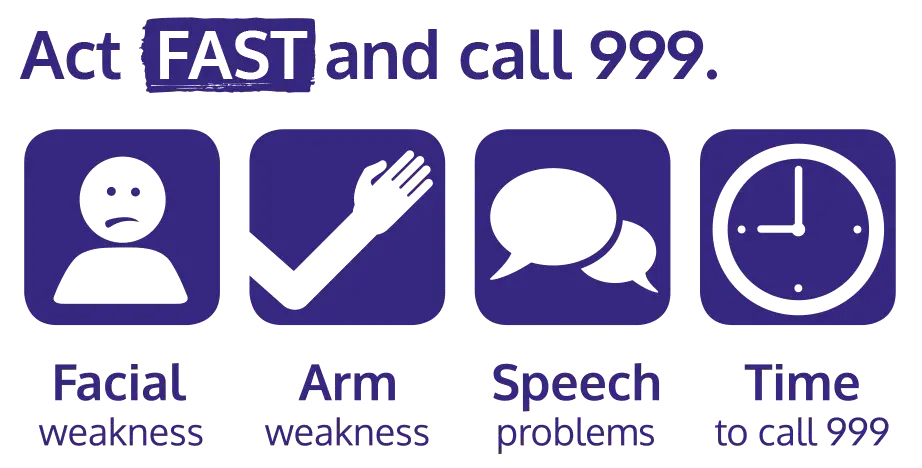
Make sure you and your loved ones all know the FAST test.
Acting FAST will give the person having a stroke the best chance of survival and recovery. Always call 999 straight away.
Ambulance paramedics are trained in stroke, and will ensure the person receives emergency medical care and specialist treatment.
The FAST test helps to spot the three most common symptoms of stroke. But there are other signs that you should always take seriously. These include:

There are three different types of stroke:
An ischaemic stroke is caused by a blockage cutting off the blood supply to the brain. This is the most common type of stroke.
A haemorrhagic stroke is caused by bleeding in or around the brain.
A transient ischaemic attack or TIA is also known as a mini-stroke. It is the same as a stroke, except that the symptoms only last for a short amount of time. This is because the blockage that stops the blood getting to your brain is temporary.
As we age, our arteries become harder and narrower and more likely to become blocked. However, certain medical conditions and lifestyle factors can speed up this process and increase your risk of having a stroke.
All strokes are different. For some people the effects may be relatively minor and may not last long. Others may be left with more serious problems that make them dependent on other people.
Unfortunately, some strokes can be very serious and some may lead to coma or sudden death. That’s why it’s so important to be able to recognise the symptoms and get medical help as quickly as possible.
The quicker you receive treatment, the better your chances for a good recovery.
Information sourced by the Stroke Association

Did you know? We offer First Aid Training which includes First Aid response in the event of a stroke, please visit our First Aid at Work Training page for full details.